
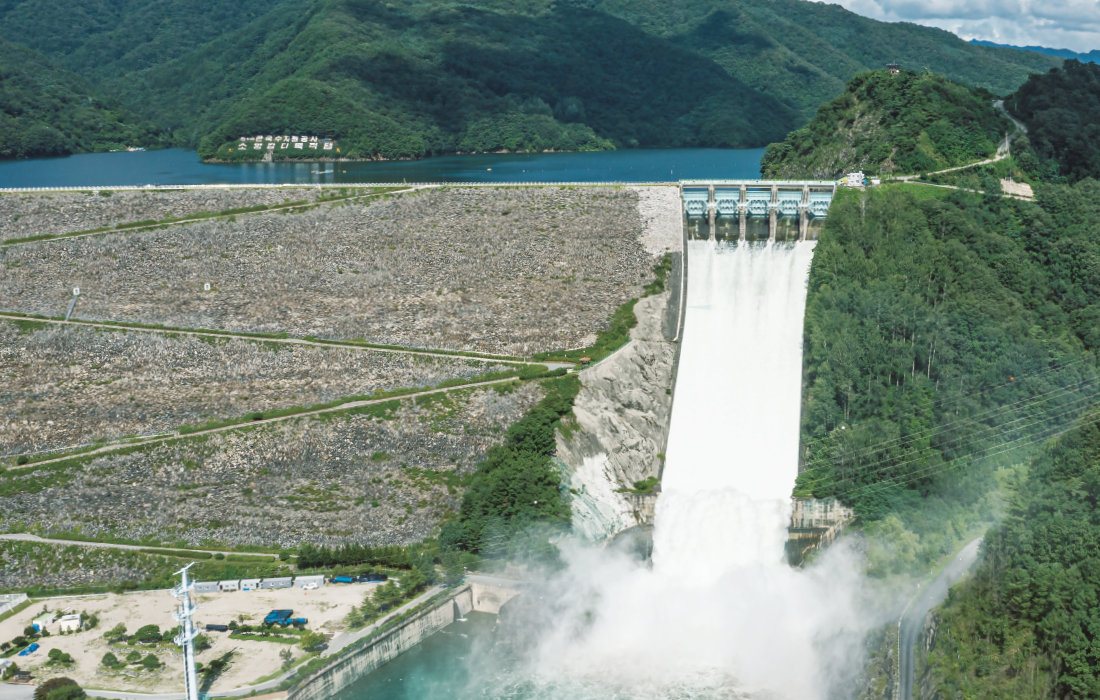
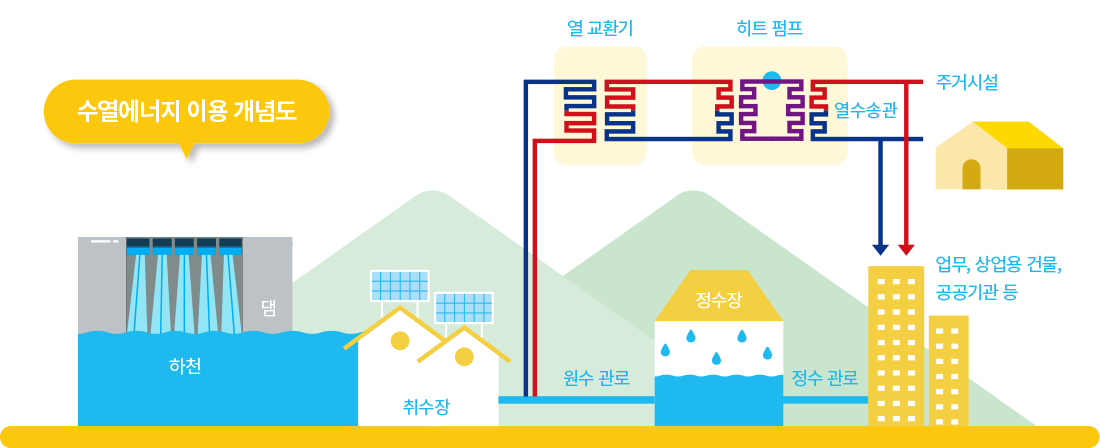
Water Temperature to be Utilized as Energy
There is a good reason why people go to rivers or the sea to
escape the midsummer heat. In summer, the water temperature is
relatively lower than the surrounding air because water has a
higher capacity to store energy (specific heat) than air. The
water temperature does not change easily even when it is heated,
so it is cooler than the air in the summer and warmer in the
winter. Hydrothermal energy allows the thermal energy of water
to be utilized for heating and cooling.
Unlike other renewable energies such as solar or wind power,
hydrothermal energy utilizes the relatively constant temperature
of water throughout the year. It is thus not significantly
affected by the weather. In addition, compared to existing
heating and cooling methods, energy savings of 30 to 70% can be
achieved, depending on conditions, thereby reducing carbon
emissions. Because it cools down heat with water, it can lessen
the use of cooling towers required for existing air conditioning
systems, thereby mitigating noise and vibration as well as the
urban heat island effect.
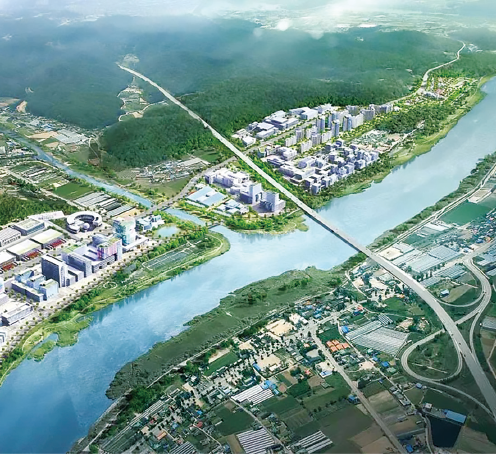
Aerial view of the
Gangwon Hydrothermal
Energy Convergence Cluster
Data Centers Demanding Cooling Water in the AI Era
As securing cooling energy for rapidly expanding data
centers around the world is becoming a key task,
hydrothermal energy is attracting attention as the next
generation source of eco-friendly cooling and heating
energy. Data centers are seen as representative
energy-intensive facilities. The average annual power used
by one data center is 25GWh, which is equivalent to the
amount used by about 6,000 households of four persons, and
more than 30% of the power consumed is used to cool down the
heat generated by servers. The development of artificial
intelligence (AI) technology increases the processing
capacity and density of servers, as well as the energy
required to cool the servers. Accordingly, global big-tech
companies are using cold seawater, lake and reservoir water,
and river water as energy sources to increase the cooling
efficiency of data centers.
A data center using hydrothermal energy is under
construction in Korea. The core strength of the Gangwon
Hydrothermal Energy Convergence Cluster that K-water is
building in Chuncheon, Gangwon-do, is the cold water deep in
the Soyanggang dam that has the deepest water depth among
Korean dams, maintaining a low water temperature of 9.5℃
throughout the year. The Cluster plans to use this deep
water to cool the data center within the cluster, and reuse
the water — the temperature of which has risen after the
cooling process — for heating smart farms and supplying
heating to Chuncheon City.
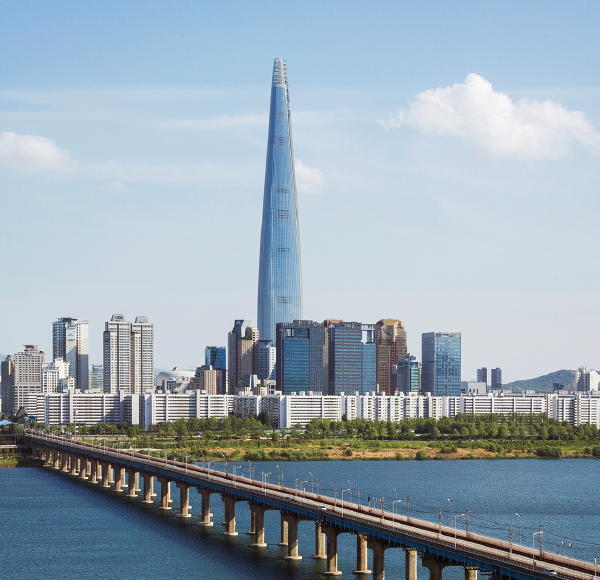
Lotte World Tower in Jamsil
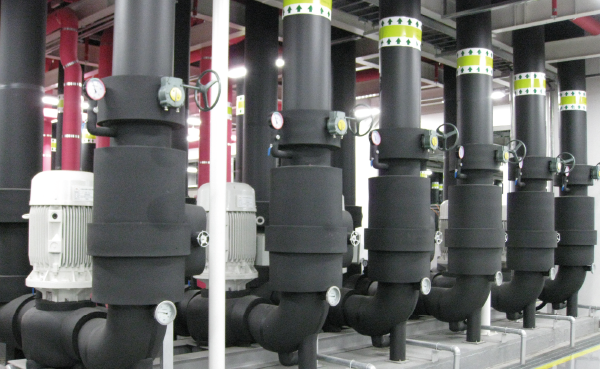
Hydrothermal heating and cooling system
at Lotte World
Tower in Jamsil
Application of Hydrothermal Energy Expanding from Buildings to Homes
K-water is expanding the use of hydrothermal energy,
focusing on large buildings and public facilities near
wide-area water-supply pipelines. Since the first
introduction of hydrothermal energy at the Juam Dam
hydroelectric power plant in 2006, it has been used for
heating and cooling at 32 dams and water purification plants
nationwide. In 2014, Korea’s first large-scale hydrothermal
energy project was implemented at Lotte World Tower in Seoul
using raw water from the wide-area water-supply system. It
is currently supplying about 10% of the total heating and
cooling power with 10.5MW of hydrothermal energy, thereby
reducing energy use by 35.8% and greenhouse gas emissions by
37.7%.
Starting in 2022, in collaboration with the Ministry of
Climate, Energy and Environment, K-water is implementing a
project supporting the installation of hydrothermal
facilities in large buildings for the private sector and
local governments. Through this project, a hydrothermal
energy system was completed at the Korea Trade Center in
December 2025, which is expected to reduce energy costs by
about KRW 1.08 billion per year, with the nation’s largest
capacity of 7,000 RT based on a single facility. In
addition, K-water is also seeking to supply hydrothermal
energy to the Yeongdong-daero Complex Transfer Center in
Seoul, and the Hyundai Motor Company Global Business Center,
respectively.
Recently, the hydrothermal energy is being rolled out on a
full scale in apartment complexes, especially in the Seoul
metropolitan area. Last year, K-water entered into an
agreement with the local government of Gyeonggi-do and the
Gyeonggi Housing and Urban Corporation for the Hydrothermal
Energy Supply Pilot Project for Hanam Gyosan Apartment, and
plans to directly supply 1,000 RT worth of hydrothermal
energy to each household — using approximately 17,000 tons
of raw water from the regional water-supply system for 763
households in the public housing district to be built in
Hanam-si, Gyeonggi-do, by 2032. This is the first case of
directly applying hydrothermal energy, which was previously
supplied mainly to large buildings or complexes, to each
household in an apartment complex. This is expected to
alleviate the burden of energy costs by reducing energy use
by about 35% compared to existing heating and cooling
systems, even without an outdoor air conditioning unit.
New Horizons in Water Supply
As such, the application of hydrothermal energy is expanding beyond large buildings to data centers, apartment complexes, and high-tech industrial complexes, thus creating new energy infrastructure for cities. Going beyond just producing electricity leveraging the flow of water, we are now producing energy utilizing the temperature of water, and thus expanding its application into new areas. Water is cooling data centers and supporting heating and cooling in the cities. Hydrothermal energy is thus opening new horizons in water, which has always been essential to our lives.