
Thoughts and Reflections
Along the
Waterway
As you stroll along the green forest path alongside the calm and
serene Daecheongho Lake, Sunlight shining through the trees and
waves rippling with the wind welcome you.
Let’s take a walk alongside the peaceful waters of Okcheon,
following the scenery that lingered in the poet’s heart for a
long time.
Through the video above, you can enjoy the sound of water encountered on the Hyangsu Lake Road.
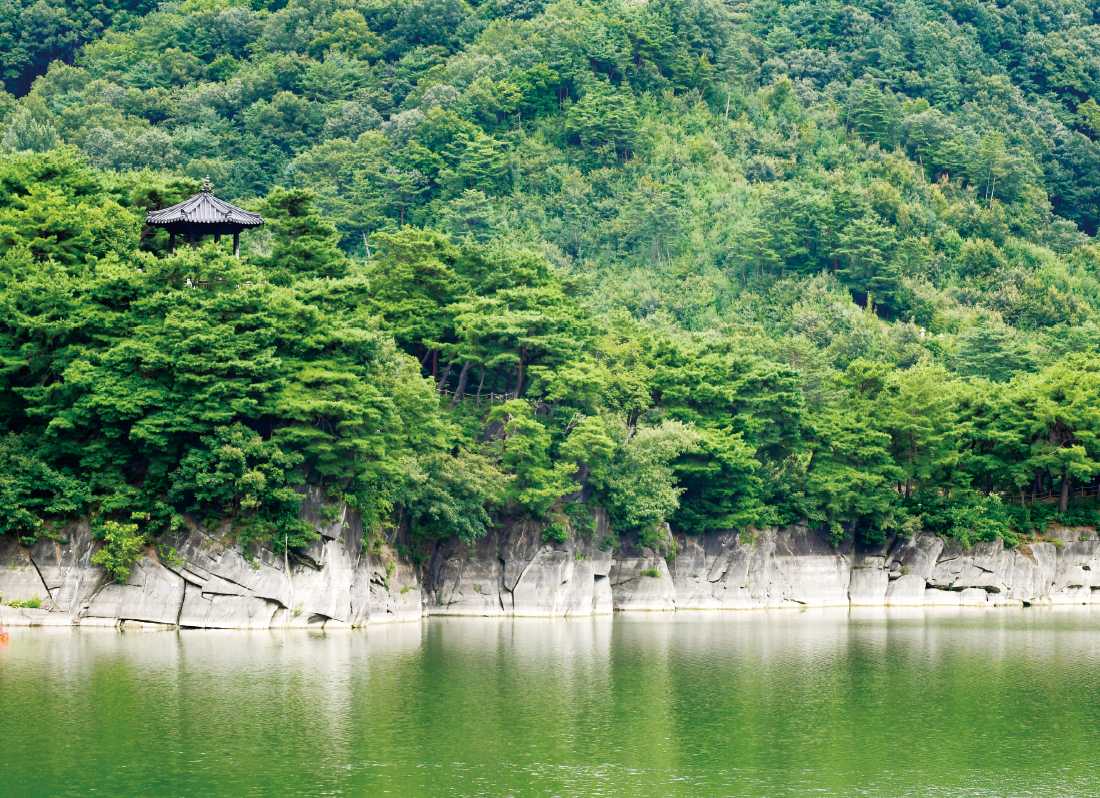
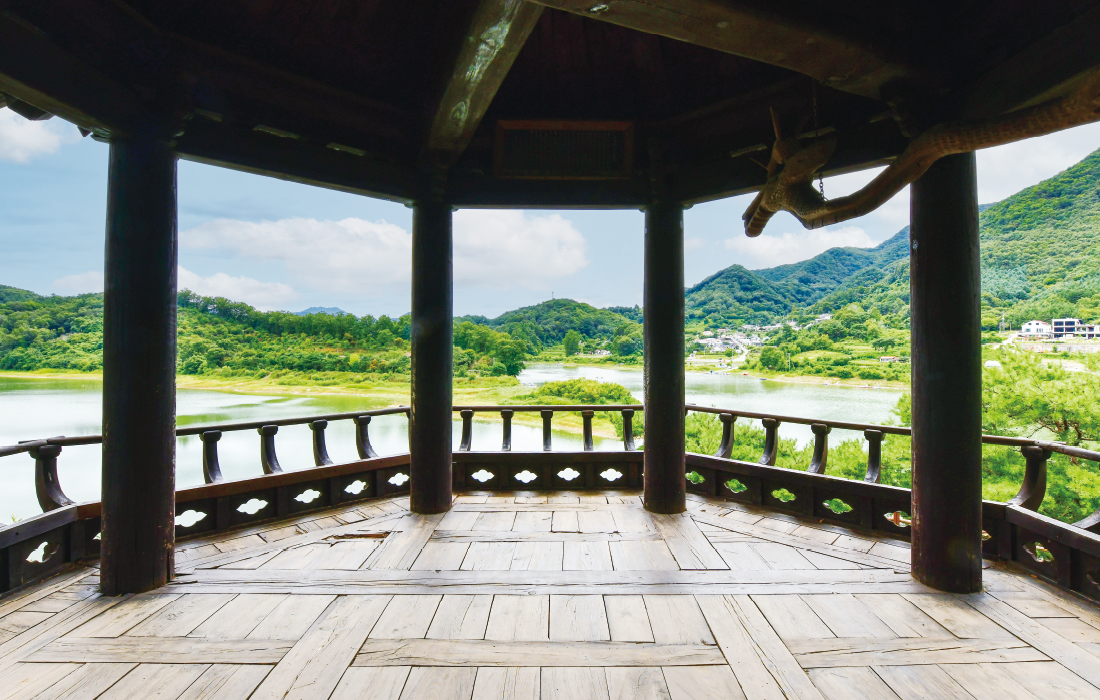
Busodamgak
Exploring the Hidden Scenery of Daecheongho Lake, like a Folding Screen Floating on Water
Surrounded by mountain slopes on all sides, a road sign
‘Okcheon’ welcomed me warmly, though the breeze rushing past the
car’s window grew chilly. The first place where I headed to upon
arrival was Busomuni Village, a propitious site beneath Hwansan
Mountain shaped like a lotus flower floating on water, whose
former name is even glorious. As I stepped out of the car, I
sensed the aroma of clear, deep water, and Busodamgak, the
hidden scenic wonder of Okcheon, revealed its majestic presence.
True to its Chinese character meaning, the towering cliffs
stretching 700 meters above Daecheongho Lake like lotus flowers
blooming by the water instantly captured my attention. Although
the foothills were submerged in the deep waters of Daecheongho
Dam in 1981, a breathtaking landscape resembling a folding
screen has instead emerged above the water’s surface. The
dignity that Uam Song Si-yeol, a prominent Neo-Confucian scholar
and statesman of of the Joseon Dynasty, praised as “Little
Geumgang” remains intact and undiminished with the passage of
time, captivating the hearts of travelers.
I then ambled along the shady trails and wooden deck paths that
follow the cliffs. As I stepped into the sunlight breaking
through the leaves and gentle waves of the lake lapping beneath
my feet, I reached a pavilion called Chusojeong. I took a moment
to catch my breath and cast my gaze toward the lakeside.
Directly ahead, Daecheongho Lake seemingly opens its arms to
embrace and welcome travelers, while to the right, a pine forest
bearing centuries of history majestically watches over the
river. As I quietly closed my eyes in this magical place where
even the wind held its breath, it finally felt like my real
journey had begun in Okcheon.
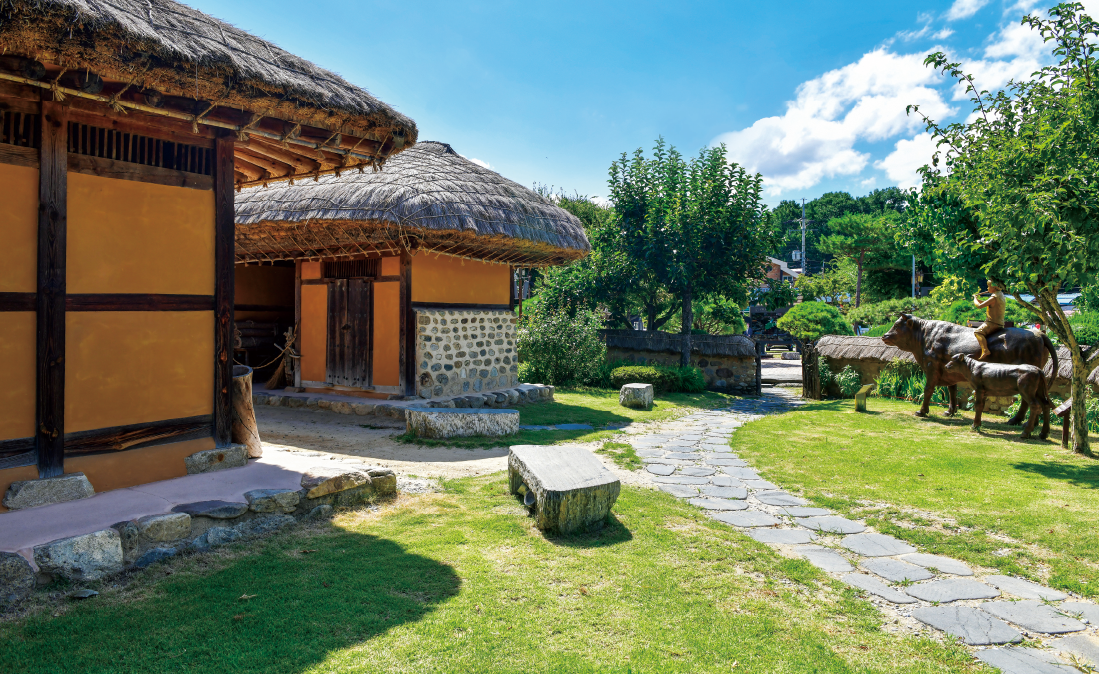
Jeong Ji-yong birthplace
Following the Poet’s Path Stretching from a Narrow Stream to Daecheongho Lake
Okcheon, offering a journey from water to water. Now I traced
back the steps of the life of the poet Jeong Ji-yong along a
clear, narrow stream. Originating from a nearby hill, the stream
curves around the entrance to the village, and along its course,
low-lying thatched houses and rice paddies blend in harmony.
Centered around the birthplace and literary museum of poet Jeong
Ji-yong, the village remains, then and now, filled with scenes
of life flowing along the spine of a little stream. Although the
outward appearance may have changed with the passage of time,
gazing at the stream flowing in front of his birthplace and the
modest farmlands allows me to vaguely guess where his poetic
world began. Although, tragically, poet Jeong Ji-yong went
missing during the Korean War — never to return after setting
out from his home in Nokbeon-dong, Seoul, with his disciples —
his literary spirit remains deeply embedded in his hometown of
Okcheon.
The traces of his literary spirit can be clearly found on the
Hyangsu (meaning ‘Nostalgia’) Lake Road, named after his
masterpiece, Nostalgia. Starting from Prehistoric Park and
winding along Daecheongho Lake, the 5.6km eco-cultural trail
provides a pleasant walking course where travelers can enjoy the
tranquility of the lake and the shade of the forest. After
walking for a little over 30 minutes, I came across the
Mulbineul Observatory, featuring an impressive, long wooden
bridge. This spot could be described as a highlight, a place
where the lyricism of poet Jeong Ji-yong is condensed, and
offering visitors the closest view of the blue waves of
Daecheongho Lake. As if the voice of the poet — who wrote, “How
could I ever forget this place, even in my dreams” — was carried
like on the ripples of the lake, the blue waves of Daecheongho
Lake sparkled, harboring a heart-wrenching longing.
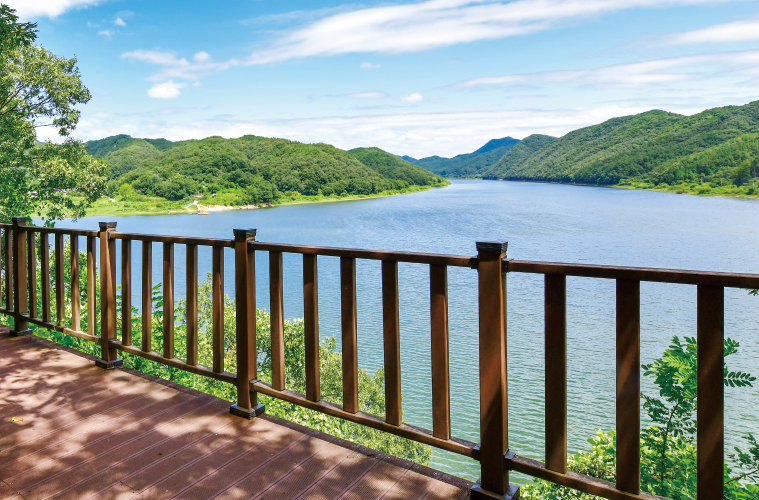
Hyangsu Lake Road
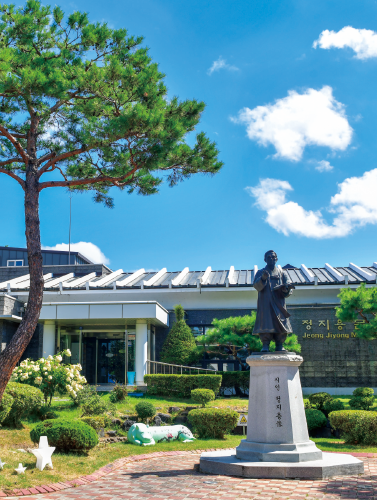
Jeong Ji-yong literary museum
Centered around the birthplace and literary museum of poet Jeong
Ji-yong,
the village remains, then and now,
filled
with scenes of life flowing along the spine of a little stream.
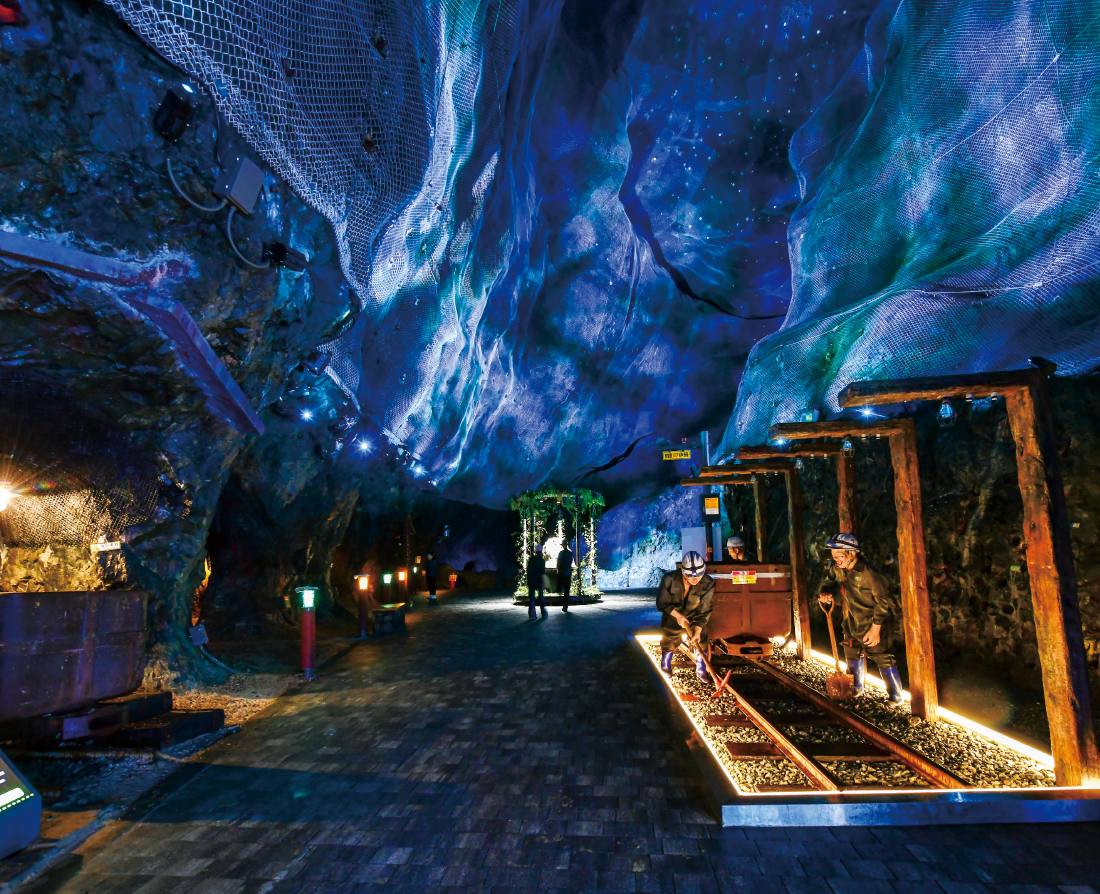
Jangnyeongsan
Forest Cave
Passing through the Forest Crafted by Clear Water, into Mystical Light
Next, I headed to Jangnyeongsan Mountain in search of the
tranquility offered by the deep forests and valleys of Okcheon.
Jangnyeongsan Mountain is a barrier dividing the waterways of
the Geumgang River basin that wind through the Okcheon area, and
it is also the final destination where it meets the stream. For
a long time, thanks to the Jangnyeongsan Mountain Natural
Recreation Forest, which features walking trails, valleys, and
accommodation facilities, it has been like a sanctuary for local
residents. Travelers can stroll along walking trails where the
phytoncides emitted by pine trees stretching toward the sky
awaken every sense, or dip their feet in the valley stream,
which sparkles with an emerald hue and emits the sounds of
crystal clear water. I witness a peaceful scene of meditating
people sitting on mats reading books or quietly closing their
eyes to meditate ripples outward like waves.
Finally, I make my way deep into the recreational forest to
reach today’s destination: the Forest Cave. The place was once
known as the Dongguk Mine, where workers sweated and breathed
heavily while mining iron ore from the mid-1960s. After its
closure in 1985 and being left desolate for a long time, the
abandoned mine has been transformed into a unique tourist
attraction and has now entered a completely new era. As I
stepped into the cool mineshaft, a world of fantasy unfolded
before me. Colorful lights and mysterious media art illuminated
a pitch-black cave, creating the illusion of having stepped into
the aurora borealis. The tunnels peeking through the colorful
lights allowed me to imagine the scene of the miners digging to
extract iron ore back then. This unexpected sight, encountered
suddenly while walking along the forest path, serves as a cool
place to relax, while revealing a new attraction of Okcheon.
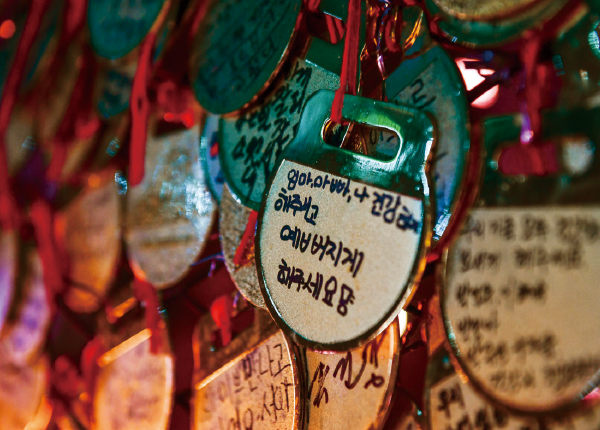
Wishes on the Wishing Rock inside the Forest Cave
Colorful lights and mysterious media art illuminated a
pitch-black cave,
creating the illusion of having
stepped into the aurora borealis.