Busan’s energy rises from the sea. The sea is not a mere backdrop—it penetrates deep into the city, shaping people’s steps and tone of speech as well as the rhythm of daily life. Haeundae, Gwangalli, and Songdo may look like the same sea, but each offers a different way of enjoying it. The briny scent of the markets mingles with the warmth of the people, and only then does Busan become truly Busan. Amid the lively scenery created where the sea and the city collide and embrace, the “real Busan” reveals itself.
Text & Photos by. Woonsuk Lim, travel writer
Same Sea, Different Pleasures
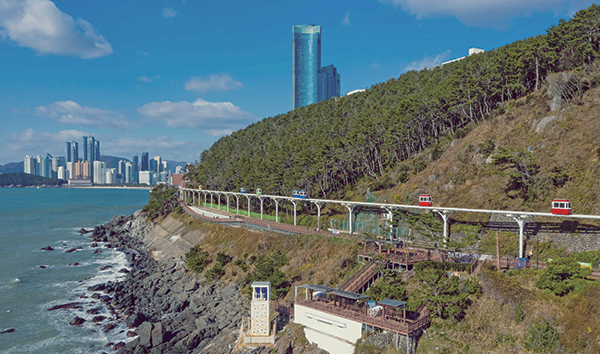
Mipo Port on the eastern end of Haeundae Beach served as a major filming location for the movie “Haeundae.” Once a busy anchorage for countless fishing boats, it is now lined with sashimi restaurants and street stalls selling fresh seafood, adding to the area’s vibrancy. Above it runs Haeundae Blueline Park along the former Donghae Nambu Line railway. Offering a slow, scenic view of where the South Sea meets the East Sea, it has become a must-visit attraction for those coming to Haeundae.
The trains are divided into the Beach Train and the Sky Capsule. The Beach Train, which resembles an old tram, departs from Mipo Station and runs 4.8 km along the coast all the way to Songjeong. Since seats are not assigned, it is best to arrive early if you want a seat with a great view. After spending time freely at Songjeong Station as the final stop, travelers can complete their journey by taking the returning train. The Sky Capsule runs on a track elevated 7–10 meters above the ground. Especially popular among couples and families, these small 2–4-seater capsules travel from Mipo Station to Cheongsapo—a 2 km route—gliding gently above the sea.
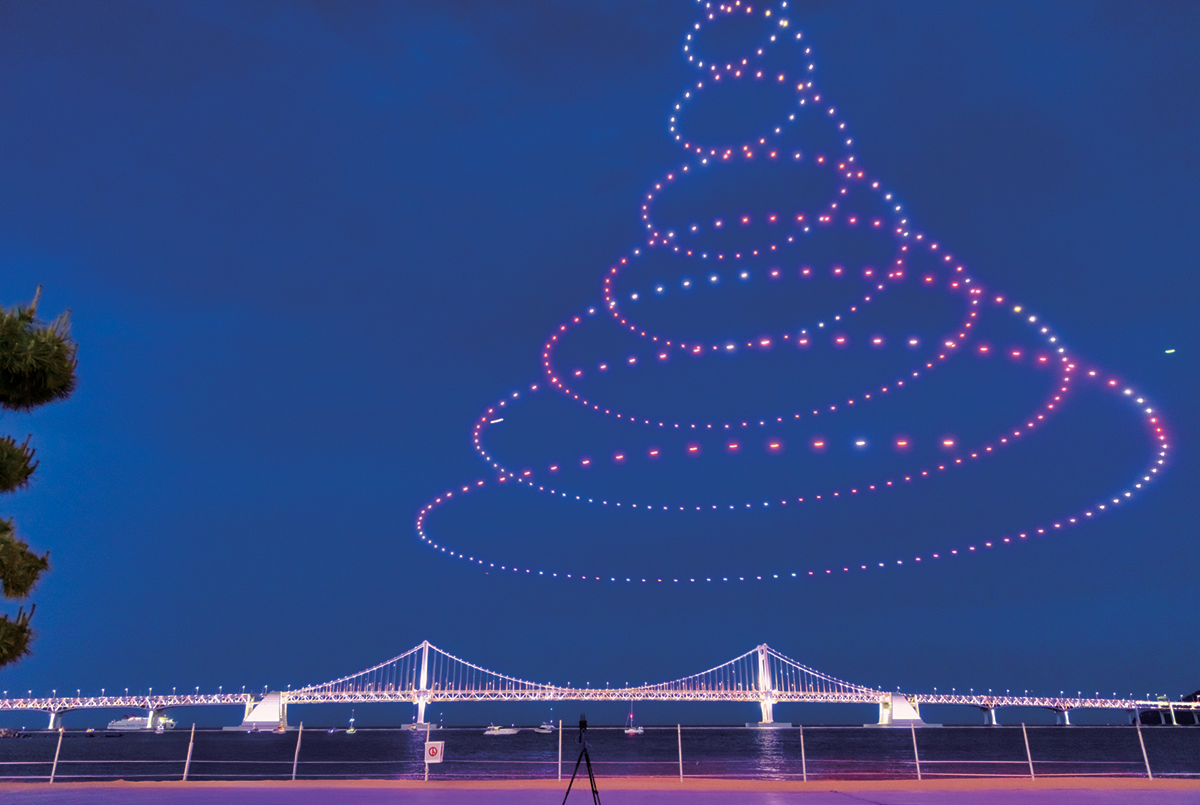
Want to enjoy the winter night sea at its best? Gwangalli Beach is the perfect choice. Even in the cold sea breeze, the “Gwangalli Drone Light Show” warms the night with its vibrant colors. As the show begins, powerful music fills the beach and Gwangandaegyo Bridge lights up like a giant equalizer, painting a dazzling backdrop. More than 1,000 drones fly across the night sky at once, creating magical formations. Spectators all around burst in awe. The drone show can be viewed from anywhere along the beach, but the stairs along the road at the center of the beach offer the perfect spot to take in both the aerial performance and the gleaming Gwangandaegyo Bridge at a glance. During the winter season, the show takes place twice every Saturday at 7 p.m. and 9 p.m.
For a different way to enjoy the sea, the Songdo Marine Cable Car is the answer. Once beloved as Korea’s first marine cable car from the 1960s to the 1980s, it halted operations in 1988 due to typhoon damage but returned in 2017 with a route four times longer—1.62 km—and on a much larger scale. Connecting Songnim Park in the east and Amnam Park in the west, the cable car reaches up to 86 meters above the water and operates 39 cabins including transparent-floor Crystal Cabins and regular cabins. The view of the sea from a height that rivals the city’s skyscrapers is exhilarating in itself. After sunset, Songdo’s nightscape spreads across the water as the cable car glides softly onward. The sea reveals a completely different face compared to daytime. Yonggung Cloud Bridge, Songdo Cloud Trail, and Songdo Coastal Bolle-gil as seen from the cable car are not to be missed either. In particular, the coastal trail connecting Songdo Beach to Amnam Park is considered the best urban walking route, offering dramatic cliffs and breathtaking ocean scenery.
Amid the bustling streets alive with vibrant sounds and the warmth of human presence
To understand a city fully, you need to look into the lives of those who live there. In Busan, the best places to do that are its three major traditional markets: Gukje Market, Bupyeong Kkangtong Market, and Jagalchi Market.
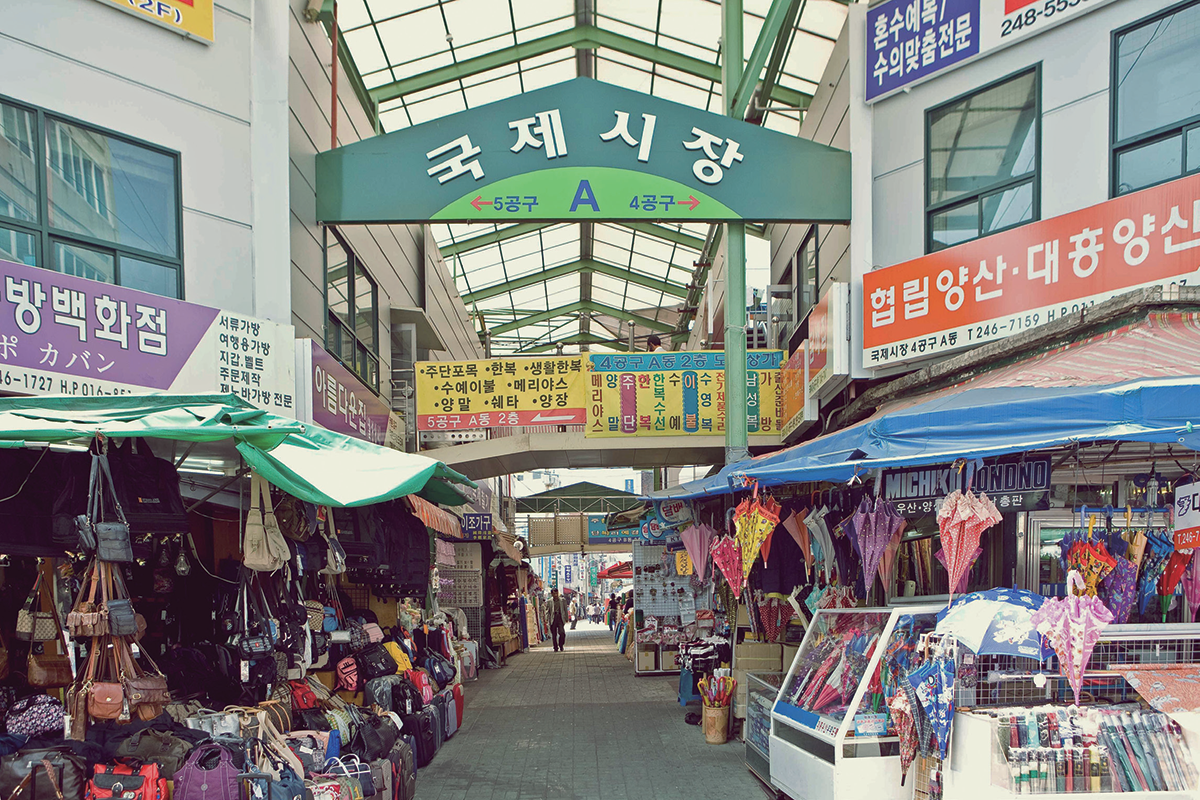
The origin of Gukje Market can be traced back to Korea’s Liberation. At the time, Japanese residents gathered at Busan Port to return to their homeland and sold their household goods at low prices; thus shaping the early market. Because crowds swarmed in such huge numbers, creating a chaotic scene, it was initially called “Dottegi Market” meaning a jumble/heap of mixed goods. Major changes came later with the outbreak of the Korean War in 1950.
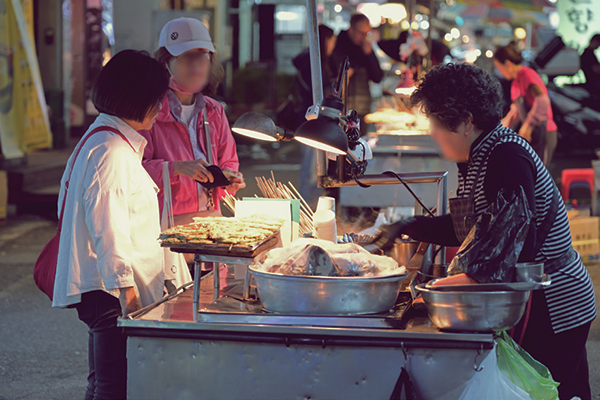
As refugees from all over the country poured into Busan along with military supplies and smuggled goods, the market began to thrive. It naturally came to be known as “Gukje Market,” meaning “International Market.” Today, it offers an astonishing variety of items such as machinery, tools, electronics, kitchenware, clothing, stationery, and bedding—you name it, they have it. Its food alley in particular greets visitors with the irresistible aromas of seed hotteok, bibim noodles, and fish cake from the moment they step inside. Filled with the ideas and individuality of young entrepreneurs, the 609 Youth Mall has become a popular spot among travelers.
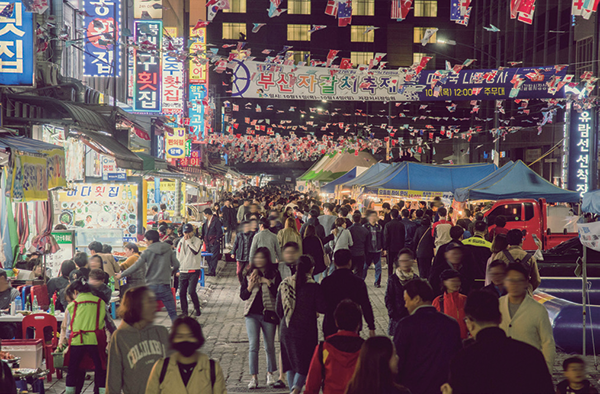
Northwest of Gukje Market lies Bupyeong Kkangtong Market, and to the south by the sea stands Jagalchi Market. The name “Bupyeong Kkangtong Market” comes from the neighborhood name “Bupyeong” and the “canned goods (kkangtong)” sold there by US military forces during the Korean War. It became especially popular among travelers after 2013 when Korea’s first night market opened here. Today, the range of goods sold there has expanded far beyond its “kkangtong” origins, but its food stalls remain the biggest draw.
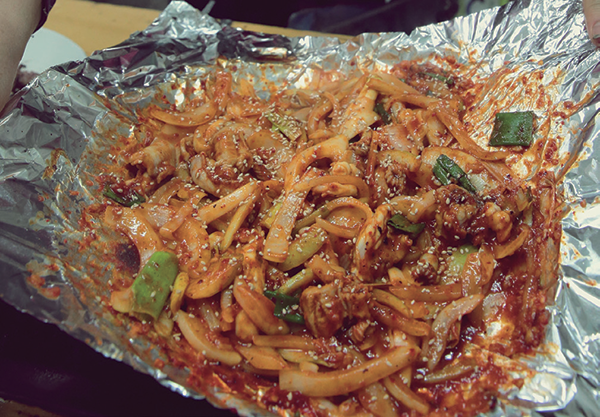
Jagalchi Market is perhaps the most iconic market associated with Busan. Its name comes from the word “jagal” meaning gravel and “chi,” a word for fish. The market grew dramatically during and after the Korean War. The most common scenes here include the energetic “Jagalchi ajimae” vendors, stalls piled high with fresh seafood, and carts loaded with ice rushing through crowds with acrobatic agility. Together, these elements create the vibrant harmony that makes Jagalchi Market a must-visit spot for anyone traveling to Busan. In the restaurant alley, visitors can enjoy local specialties such as grilled eel and whale meat. Charcoal-grilled eel infused with a deep smoky flavor is particularly unforgettable—a taste that brings many back to the city.
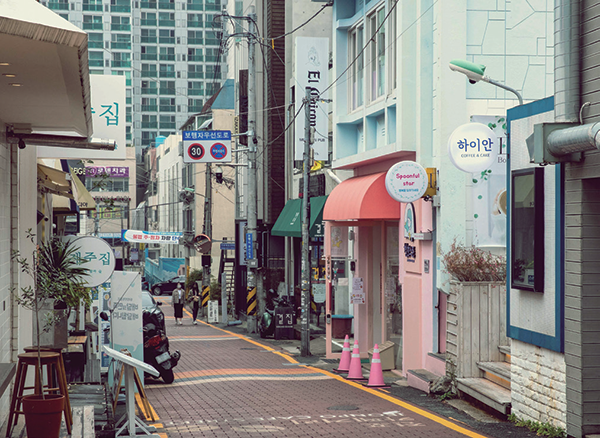
Want to experience Busan’s trendiest side? Head to Jeonpo Café Street. Once lined with tool shops, the Jeonpo-dong area has been reborn as a district filled with unique cafés, studios, and quirky restaurants. Instead of uniform franchise chains, each café reflects the owner’s personal taste—from charming décor to signature menus that instantly capture visitors’ attention.
Vintage tool shop signs juxtaposed with stylish modern cafés create a distinctive atmosphere found only here. Thanks to this special charm, Jeonpo Café Street was the only Korean destination included by The New York Times in its 2017 list of “52 Places to Go.” Today, alongside cafés, a mix of boutique shops and eateries has cemented this area as an essential stop on any Busan itinerary.

 View previous
 이전호 보기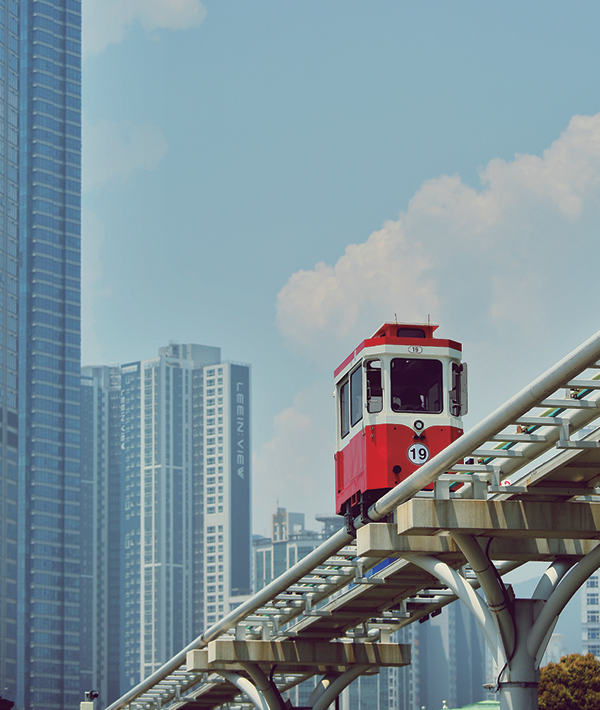
 ©DNA Studio
 ©Visit Busan / Summertree Co., Ltd.
 ©Korea Tourism Organization / Hyeong-jun Jeon
 ⓒ Live Studio
 ⓒ Beom-soo Lee, Korea Tourism Organization